Streamline Your Workflow with a Daily Digital Planner
In the fast-paced world of creative entrepreneurship and digital management, staying organized is less about rigid discipline and more about having the right tools. For designers, marketers, and small business owners using tablets like the iPad or Android devices, the shift from paper to pixels has been transformative. The Daily Digital Planner represents a significant evolution in productivity, specifically engineered for applications like GoodNotes, Notability, Xodo, and Noteshelf. Unlike generic templates, this specific planner system—comprising the Daily Planner and Daily Planner 1 pages—offers a seamless, tactile experience that mimics the best parts of analog planning while leveraging the power of digital technology. It is not just a calendar; it is a comprehensive design asset intended to centralize your life and work.
The Anatomy of an Efficient Digital Layout
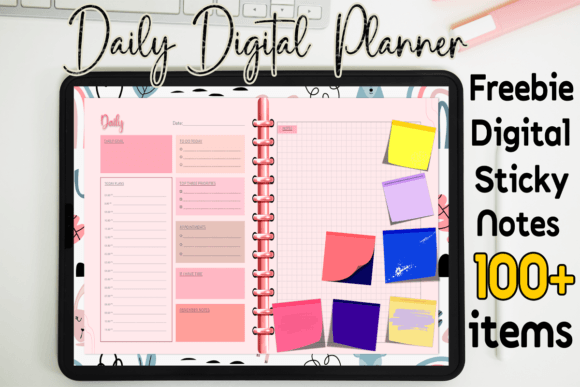
When we talk about the visual characteristics of a high-quality digital planner, we are discussing more than just pretty colors. The Daily Digital Planner relies on a strong foundation of modern typography and spatial awareness. The layout of the Daily Planner 1 page, for instance, likely utilizes a grid system that balances white space with functional areas. This is crucial for readability. If a planner is too cluttered, it induces anxiety rather than calm. If it is too sparse, it fails to capture the complexity of a busy professional's day.
The personality of this tool is professional yet approachable. It avoids the "sticker shock" of overly decorative planners that prioritize decoration over utility. Instead, it focuses on a clean sans serif font for headers and a highly legible serif or sans serif body text, ensuring that your handwritten notes—which you input via stylus—don't compete with the pre-printed structure. The appeal lies in its adaptability. Whether you are a content creator scheduling posts or a crafter organizing supply orders, the visual hierarchy guides your eye naturally from priority tasks to time-blocked schedules. This thoughtful use of typeface and spacing ensures that the planner feels premium, avoiding the cheap look of standard PDF forms.
Integrating the Planner into Professional Workflows
The true value of a Daily Digital Planner is revealed in how it handles the chaos of real-world projects. For the entrepreneur or small business owner, the day is rarely linear. You might be jumping from logo design revisions to a marketing strategy call, followed by packaging design approvals. The Daily Planner pages are designed to accommodate this non-linear flow. By utilizing the "100+ items" file PDF included in this bundle, users can access a library of digital elements—checklists, habit trackers, and priority matrices—that can be copied and pasted directly onto the daily view.
This modularity is a game-changer for brand strategists and publishers. Imagine you are working on an editorial design project. You can use the planner to map out your content calendar, but you can also embed links to mood boards or asset libraries directly into the planner interface. Because this is a digital product optimized for apps like Notability and GoodNotes, the interaction is fluid. You aren't just looking at a static image; you are interacting with a dynamic database. This allows for a level of consistency in your workflow that paper planners simply cannot match. You can duplicate a successful day's structure for the next week, ensuring that your professional habits become standardized without the tedium of rewriting lists.
Practical Application for Creatives and Marketers
For designers and creatives, a planner is often a canvas in itself. The Daily Digital Planner serves as a central hub for design assets and project management. Consider the workflow of a social media manager or a blogger. The day involves not just the creation of content, but the curation of it. Using the Daily Planner 1 pages, you can visually block out time for "Deep Work" (such as writing or graphic creation) versus "Admin" (emails and invoicing). The visual separation provided by the planner’s layout helps in maintaining focus, a critical component of creative productivity.
Furthermore, the adaptability of the file across different devices—specifically the mention of Android tablet compatibility alongside iPad—ensures that your workspace isn't tethered to a single ecosystem. This is vital for freelancers who may switch between devices depending on whether they are at a desk or on the go. The ability to import this PDF into Xodo or Noteshelf means that your brand identity and personal organization system remain intact regardless of the hardware. It acts as a portable office, allowing you to manage client projects, track deliverables, and sketch out new ideas all within a single, cohesive interface.
Maximizing the "100+ Items" Freebie Bundle
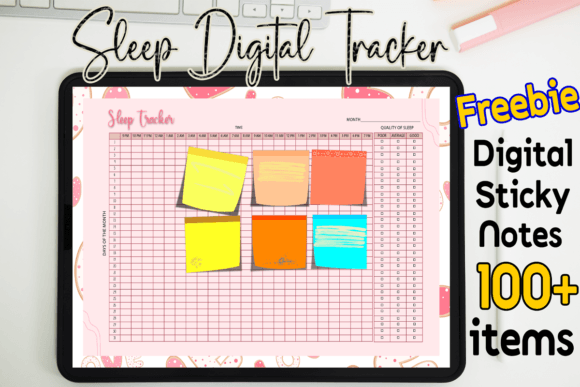
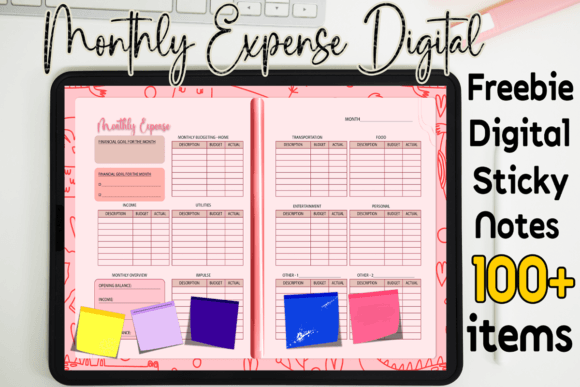
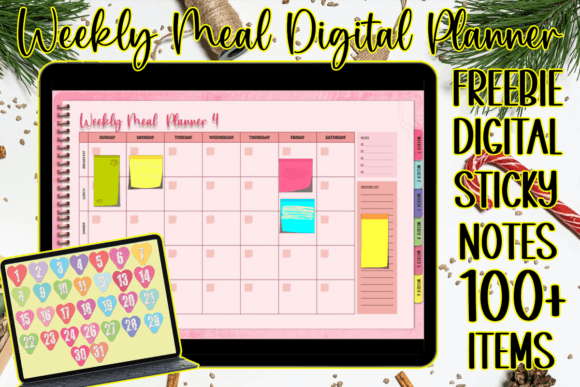
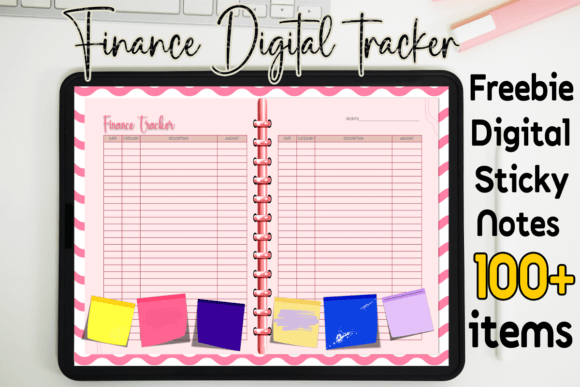
The inclusion of a free bundle with over 100 items is where this product shifts from a simple planner to a robust design asset kit. These items are not merely decorative; they are functional tools designed to enhance visual hierarchy and organization. For a crafter or hobbyist, these might include inventory trackers or project timelines. For a graphic designer, they could be elements that help in visualizing a brand strategy or mapping out a website wireframe.
When evaluating these assets, look at how they interact with the underlying typography of the planner. A well-designed sticker or widget should complement the modern typography of the Daily Planner, not clash with it. The goal is to create a visual language that is unique to your needs. By mixing and matching these 100+ items, you can build a custom dashboard. This customization is what prevents the "abandoned planner" syndrome. When a tool feels like it was built specifically for your workflow, you are far more likely to engage with it daily, leading to better time management and project execution.
Design Details and Usability Considerations
When selecting a digital planner, the subtle details of the design assets matter immensely. The Daily Digital Planner succeeds because it pays attention to the user experience (UX) of planning. For instance, the hyperlink structure within the PDF is a critical feature. In a premium digital planner, you expect clickable tabs that jump instantly from the monthly overview to the specific daily page. This mimics the speed of a web browser and makes the tool feel responsive and professional.
Readability is another cornerstone of this product. The choice of font pairings within the planner—likely a bold sans serif for dates and a lighter weight for notes—creates a clear visual hierarchy. This is essential when you are glancing at your tablet during a fast-paced meeting. You need to be able to distinguish between a 9:00 AM meeting and a 3:00 PM deadline instantly. The Daily Planner 1 layout prioritizes this clarity, ensuring that the structure remains functional even when filled with your handwritten notes and imported stickers.
Finally, consider the commercial licensing and the nature of the "digital product no physical product provided" aspect. This is an investment in your productivity infrastructure. Unlike a physical book that expires at the end of the year, a high-quality PDF can often be duplicated or used year after year with minor adjustments. For the small business owner, this represents a sustainable approach to organization. It reduces paper waste while offering a tactile, stylus-driven experience that keeps the creative mind engaged. By integrating this planner into your daily routine, you are not just organizing your day; you are professionalizing your entire approach to time management and creative output.