Coral and Navy Blue Patterns: Beyond the Surface
There’s a reason the combination of coral and navy blue feels both timeless and immediate. It’s a pairing that carries the warmth of a sunset with the depth of the ocean, creating a visual conversation that’s energetic yet grounded. When translated into a repeating pattern, this color story becomes a powerful design asset. The Coral and Navy Blue Patterns set isn't just a collection of colors; it's a curated mood, a ready-made foundation for projects that need to feel both inviting and authoritative. This is the starting point for your next branding kit, your website background, or the packaging that makes your product stand out on a crowded shelf.
The Anatomy of a Versatile Pattern
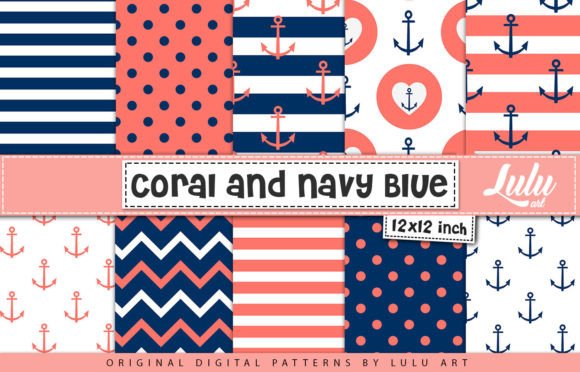
Understanding the visual personality of these patterns is key to using them effectively. The coral isn't a shy, washed-out pink. It’s a confident, mid-tone shade that pops against the deep, sophisticated navy. This creates a high-contrast, legible backdrop that doesn't overwhelm the foreground content. The patterns themselves likely range from geometric repeats to more organic or abstract forms, but the consistent color palette ensures they all speak the same brand language. Think of it as a premium font family for your backgrounds—each pattern is a different weight or style, but they all belong to the same cohesive typeface.
This inherent cohesion is what makes the set so valuable for brand identity. You’re not just getting ten separate sheets; you’re getting a unified visual system. A small business owner can use a geometric coral and navy pattern for their website header, a different, more subtle pattern for their business card background, and a third for their social media graphics, and the entire suite will feel intentionally designed. This kind of consistency is what separates amateur projects from professional ones. It builds recognition and communicates a level of care that audiences instinctively trust.
Where These Patterns Come Alive
The true test of any design asset is its real-world application. For content creators and bloggers, these digital papers are a shortcut to elevated visual storytelling. Use a pattern as the background for a quote graphic on Instagram. Layer a semi-transparent version under text in a newsletter header. Print a sheet to use as a backdrop for flat-lay product photography—the 300 dpi JPEG files ensure the print quality is crisp, not pixelated. The nautical envelope freebie is a perfect example of a tangible application, ideal for wedding invitations, boutique gift cards, or direct mail pieces for a coastal-themed brand.
For marketers and entrepreneurs, the patterns function as a strategic tool. A bold coral and navy pattern can make a call-to-action button impossible to ignore. Used in a slide deck, they can energize a presentation without relying on clichéd stock photos. In packaging design, a patterned sleeve or insert transforms a simple box into an unboxing experience. The key is to use the patterns with intention. They are not just decorative; they are communicative. A busy, complex pattern might work for a youthful, energetic brand, while a simpler stripe or dot could lend a more refined, classic feel to a professional service.
Integrating Patterns into Your Design Workflow
How do you actually choose and implement these assets? Start with your project’s goal. Is it to attract attention, convey luxury, or provide a calming backdrop? Coral and navy inherently balance vibrancy and stability, making them suitable for a wide range of tones. Before committing, test the pattern at the scale it will be used. A pattern that looks delightful as a 12x12” sheet may become visually noisy when tiled across a large monitor screen. Zoom in and out. Place your primary text and imagery over it. Check for legibility—does your white or dark text maintain sufficient contrast?
Next, consider your font pairing. A strong, modern sans-serif font in white or navy will look clean and contemporary against a coral pattern. A classic serif in a deep navy could lean more traditional and elegant. If you’re using a script font or handwritten font for a headline, ensure the pattern behind it is more subdued to avoid a cluttered look. The goal is visual hierarchy: the pattern should support your message, not compete with it. Always test your combinations in context—what works in a mockup may fail in a live email or on a printed flyer.
Finally, remember the practicalities. These are digital files, not physical paper. You’ll need to unzip the downloaded package to access the JPEGs. This digital format offers incredible flexibility. You can scale them for use in web design, adjust their color slightly in photo editing software for a custom hue, or combine them with other graphics. For commercial use, always review the specific license that accompanies your purchase to ensure it covers your intended application, whether for client work or products for sale.
The Coral and Navy Blue Patterns set is more than a decorative filler. It’s a foundational element for building a visually compelling and cohesive brand world. By understanding its personality, testing its applications, and integrating it thoughtfully with your other design choices—be it a serif font for editorial design or a clean sans-serif for web design—you leverage a powerful asset that does more than look good. It works hard, creating recognition, enhancing professionalism, and engaging your audience on a deeper, more aesthetic level. It’s the kind of thoughtful detail that elevates the entire creative project.