China Blue Patterns + Freebie: Elevate Your Projects
There’s a certain elegance that comes with heritage design—the kind of aesthetic that feels grounded, artistic, and timeless. When I first encountered the China Blue Patterns + Freebie digital collection, it struck me not just as a set of backgrounds, but as a versatile toolkit for building sophisticated brand narratives. In a market saturated with neon gradients and minimalism, these designs offer a return to intricate beauty, drawing inspiration from classic ceramic artistry.
The Anatomy of a Sophisticated Design Asset
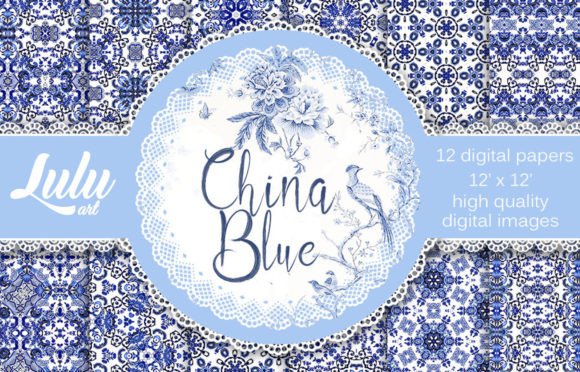
At its core, this collection is defined by its visual personality. These aren't generic textures; they are curated digital paper sheets that carry the weight of history. The palette is dominated by that iconic indigo and cobalt blue against crisp whites, evoking a sense of calm and authority. The patterns themselves range from delicate florals to bold geometric chinoiserie, offering a rhythm that can guide the viewer's eye across a layout without overwhelming the content.
For the designer or marketer, understanding the "mood" of an asset is half the battle. The China Blue Patterns speak a language of premium quality. They suggest that a brand is established, detail-oriented, and values aesthetics. Whether you are a small business owner looking to upscale your packaging or a publisher designing a book cover, the visual weight of these patterns does a lot of heavy lifting for your brand identity.
From Digital Files to Tangible Reality
One of the most critical aspects of working with modern design assets is understanding the file format. It is important to note that the China Blue Patterns + Freebie are digital files, not printed paper sheets. You are receiving 12 digital paper sheets, each sized at a generous 12 x 12 inches. This square aspect ratio is incredibly useful for social media grids, album covers, and square print formats.
Furthermore, the quality is professional-grade. Delivered as High Quality, 300 dpi JPEG files, these graphics ensure that your final output—whether on a massive trade show banner or a small business card—remains crisp. There is no pixelation, only clean, sharp lines. However, there is a technical prerequisite: the entire set of paper files has been compressed in ZIP format. You must know how to unzip files to access and use them. This is standard practice for preserving file integrity, but it’s a reminder that this is a toolkit for those ready to work.
Practical Applications: Where Blue Patterns Shine
The versatility of this collection is where the true value lies. It is not limited to one niche. Here is how different professionals can leverage these assets:
- Logo Design and Branding: Use a cropped section of a pattern as a background for a wordmark. The intricate details create a textured backdrop that makes clean, sans serif font typography pop.
- Packaging Design: If you are in the tea, cosmetics, or luxury goods industry, these patterns are gold. Imagine a matte box with a glossy blue pattern sleeve—it instantly elevates the unboxing experience.
- Editorial Design: For publishers and bloggers, these sheets work beautifully as chapter dividers in a PDF or background textures for quote graphics.
- Web Design: While heavy textures can slow down a site, using these as section headers or "hero" image overlays can add depth to a digital layout.
- Crafting and Hobbyists: Since they are digital paper sheets, they are perfect for scrapbooking, creating custom stationery, or printing unique gift wrap.
The Freebie: Extending the Creative Ecosystem
Included in this set is a delightful bonus: a printable tea bag envelope. This isn't just a throwaway extra; it’s a proof of concept. It shows you exactly how the patterns translate into a physical product. For event planners or small business owners hosting a workshop, printing these envelopes adds a bespoke touch that feels expensive but costs only pennies to produce. It demonstrates the practical application of the patterns in packaging design on a micro-scale.
Influence on Visual Hierarchy and Readability
When incorporating patterns into your work, visual hierarchy is your primary concern. A busy background can kill readability if not handled correctly. The China Blue Patterns work best when paired with solid blocks of color to break up the visual noise.
For example, if you are creating a flyer, don't place body text directly over the busiest part of the pattern. Instead, use a solid white or cream container for your text and let the blue pattern frame it. This approach maintains the professionalism of the layout while ensuring your message is legible.
Regarding typography, these patterns demand a strong counterpoint. Because the patterns are traditional and ornate, they pair exceptionally well with modern, clean typefaces. A geometric sans serif font creates a beautiful tension between the old and new. Alternatively, a bold serif font can lean into the heritage vibe for a cohesive, classic look. Avoid overly decorative script fonts or handwritten fonts for body copy, as the background already provides enough visual complexity.
Strategic Selection and Usage
Before downloading, evaluate your project's specific needs. Ask yourself: Does my brand voice align with elegance and tradition? If you are a tech startup focusing on speed and disruption, these patterns might feel out of place. However, if you are a consultant, a boutique owner, or a creative service provider, this aesthetic builds immediate trust.
When testing font pairings, create a mood board. Place your chosen typography directly over the China Blue Patterns to see how the letterforms interact with the curves of the design. Sometimes, a display font that is too thin gets lost in the details of the blue.
Finally, remember that while these are digital files, they bridge the gap between the screen and the hand. The 300 dpi resolution ensures that your printable materials look just as good as your digital mockups. Whether you are designing a website header or a physical tote bag, the China Blue Patterns + Freebie set provides a robust foundation for creating memorable, high-quality visual content. It is a reminder that in the world of modern typography and design, texture and heritage remain powerful tools.